Showing posts with label water quality. Show all posts

Wednesday, March 4, 2009

SPIN CYCLE~ sand separators

Part 2 in a series on water filtration

 
Sometimes, wells have a lot of sediment and sand.  This material can really cause problems in a water system, and occasionally, cartridge filters just aren't sufficient to do the job.

In those cases, we will often install a sand separator, like the ones pictured in the photo.  
These filters literally spin the sand out of the water:

First,  unfiltered water is drawn through a side inlet, where it begins spinning down an inner chamber, creating a sort of vortex.  This spinning action causes the sand, which is heavier than water, to separate out of the central column of water.  The clean water is then pulled out of the center of the inner chamber, and sand falls out of the unit.

These filters do not address solutes or chemical contaminants in the water, only particles- and even then, not all of the particles.  Most systems require additional cartridge filters to remove smaller particles from the the client's water before it enters their water system, but these separators are a terrific first-line against particulates.  The thing that makes this filtration method really unique is that there are no moving parts, and nothing to replace-ever; so it could save a client a ton of money in cartridge replacements, not to mention if they have drip irrigation or spray nozzles in their systems.  

Sand Separators may not be the best solution for every case,  but it is truly dizzying just how effectively they can spin a solution for some!


Saturday, February 14, 2009

Where Will You Get Your Water?


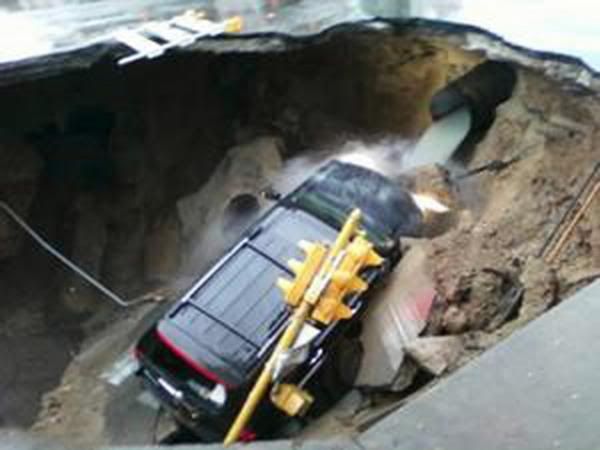
Sinkholes like this have become nearly
epidemic all over the US as old pipes
begin to fail.
As a water professional who has lived in the Metro Atlanta, Georgia area all my life, I’ve developed a sort of unique perspective on local happenings. A few years back, following all our Olympic glory and in the middle of a huge developmental boom, we began to see roads collapsing and washing away all over the city- it seemed like a new incident was broadcast every night on the news. Our 80+ year-old infrastructure was in trouble- and there was no money to fix it.
Mayor Shirley Franklin stepped up and took a bold stance- she became modern America’s first “Infrastructure Mayor”, committing to repair and upgrade the City’s infrastructure in her term of office.
Upset Atlantans protest the proposed
closure of West End Station #7.
By in large, the citizens of the Atlanta got behind her- I mean- it sounded like a good idea, right?
Here’s the problem: it is very expensive, it takes a long time, and it's product is not visible.
So- what sounded like a good idea to everyone back then is becoming a hassle as we attempt to navigate our streets and get frustrated with the constant construction traffic. What sounded great before sounds less and less warm and fuzzy with every fire station that faces closure. Infrastructure, and Mayor Franklin, are becoming less and less popular.

As I write this article, the Georgia Legislature begins its 2009 session with a $2.5 Billion deficit, and Atlanta’s could top $80 Million- one of the largest in the nation. With lawmakers calling for a truly balanced budget, will this be the end of Atlanta's commitment to infrastructure?

There is another way- one I recently wrote about:


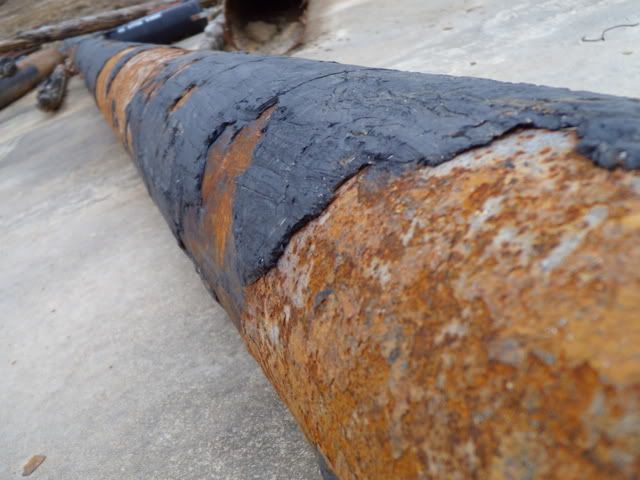
Rusty supply lines are one of the biggest
threats to US drinking water.
In Detroit, Michigan, their Mayor recently appointed Victor Mercado, a private water industry tycoon, head of the city’s troubled water works. While the system continues to run down, the city has reduced its repair workload, instead focusing its resources on disconnecting delinquent customers. They disconnected over 40,000 customers last year, and had proposed to double that number this year. Now that number will surely adjust upward in light of new economic stresses on Government and citizens.
Potentially, after 2 year’s time, that city will wake up to find nearly 200,000 households without water coupled with little or no positive action toward a rapidly failing infrastructure.
Running the system down, starving it of capital: these are the kinds of measures we usually see in the corporate world before a “hostile takeover”.
Once a system is too far gone, the citizens will accept any alternative, and government will be happy to get the “hot potato” out of their hands at any cost.

Like roads and bridges, water infrastructure is one of the basic services we believe should be available and provided by government. Without water, a city cannot flourish. Without water, people cannot live. Without government protecting and providing citizens access to this basic need, these Profiteers can and will sell their commodity to the highest bidder, and many hundreds of thousands- even millions- may find their interest taking a back seat to industry, by far the largest and most lucrative consumer of water in the world.

If you think this is not possible- take a look at what the World Bank is already doing in third-world nations all over the globe. Water is now treated as a global commodity, and multinational corporations are buying up the rights to that water as quickly as they can. Water which had, for centuries, completely provided for entire self-sustaining communities is suddenly becoming a luxury which poor families simply cannot afford.

Our American lifestyles are highly dependant on access to a lot of water. But on a level of necessity I see very few issues that could be more important than where our water will come from in the future. If we don’t know the answer to this question, we should begin to understand what is happening to infrastructure around us, and begin looking at all options to protect our own access. We should contact our legislators and let them know that we do not want any infrastructure to be privatized. We should ask them to commit to protect the rights of private citizens to collect water off their own property- including by wells and rain cisterns. We should let them know that we expect them to favor individuals’ access to water over corporate agendas. Water is fundamental to life. Are we really willing to give that up?

Wednesday, February 4, 2009

Prescription Drugs in Drinking Water?


Americans are living longer and longer. It's all about advancement in medical research, and most of that advancement has to do with pharmaceuticals. We are a pill-popping Nation, and a new study by the Associated Press highlights our drug use is a most unusual way:
They have found a vast array of pharmaceuticals — including antibiotics, anti-convulsants, mood stabilizers and sex hormones — in the drinking water supplies of at least 41 million Americans.

It's not that they tested some water supplies and didn't find pharmaceuticals, the study group found these drugs in EVERY test they conducted!

Here are some of the key test results obtained by the AP:
Image courtesy of  Danilo Rizzuti /
FreeDigitalPhotos.net

* Officials in Philadelphia said testing there discovered 56 pharmaceuticals or byproducts in treated drinking water, including medicines for pain, infection, high cholesterol, asthma, epilepsy, mental illness and heart problems. Sixty-three pharmaceuticals or byproducts were found in the city’s watersheds.
* Anti-epileptic and anti-anxiety medications were detected in a portion of the treated drinking water for 18.5 million people in Southern California.
* Researchers at the U.S. Geological Survey analyzed a Passaic Valley Water Commission drinking water treatment plant, which serves 850,000 people in Northern New Jersey, and found a metabolized angina medicine and the mood-stabilizing carbamazepine in drinking water.
* A sex hormone was detected in San Francisco’s drinking water.
* The drinking water for Washington, D.C., and surrounding areas tested positive for six pharmaceuticals.
* Three medications, including an antibiotic, were found in drinking water supplied to Tucson, Ariz.

How could this happen? Its simple:

People take these drugs. They pass through their bodies and are flushed back into the system.
By law, our water treatment plants test and treat bacteria and metals- add chlorine and fluoride, but the federal government doesn’t require any testing and hasn’t set safety limits for drugs in water, and, therefore requires no testing or treatment for these contaminants.

And while researchers do not yet understand the exact risks from decades of persistent exposure to random combinations of low levels of pharmaceuticals, recent studies — which have gone virtually unnoticed by the general public — have found alarming effects on human cells and wildlife.

“We recognize it is a growing concern and we’re taking it very seriously,” said Benjamin H. Grumbles, assistant administrator for water at the U.S. Environmental Protection Agency.

So maybe it's not just the hormones in the chickens we eat. Maybe its not only the antibiotics in the beef we eat. Maybe its not the chemical levels in our fruits and vegetables-
Maybe its our water!

Maybe we should think before we drink.